







E-mail Us
Search

Machine Learning

Rejecting algorithm black boxes. Our PhD-led team deeply integrates machine learning with underlying physical mechanisms. Powered by robust computing, we enable novel material prediction and high-dimensional data mining to accelerate top-tier research breakthroughs.

Our Expertise in Machine Learning Models for Scientific Research

Machine Learning Force Fields (MLFF)

Bridge the gap between quantum accuracy and large-scale simulations. We develop customized neural network potentials, enabling molecular dynamics simulations of millions of atoms with First-Principles precision. This breakthrough accelerates the discovery of complex alloys and catalytic materials without sacrificing computational rigor.

Accelerated Materials Discovery & Screening

Reject traditional trial-and-error. We integrate machine learning with high-throughput computational data to build robust predictive models. By mapping high-dimensional composition-structure-property relationships, we rapidly screen millions of candidate materials for energy storage, photovoltaics, and catalysis, directly targeting top-tier journal breakthroughs.

AI-Driven Drug Design & Molecular Generation

Transform pharmaceutical R&D with deep learning. We deploy advanced generative models and graph neural networks to design novel molecular structures and predict drug-target affinities. Combined with dynamic simulations, our AI solutions drastically narrow down candidate pools, saving immense experimental costs and accelerating preclinical pipelines.

Physics-Informed Neural Networks (PINNs)

Shatter the computational bottlenecks of traditional finite element analysis. By embedding fundamental physical laws into neural network architectures, we construct highly accurate surrogate models for complex multi-physics coupling. This drastically reduces the computational time of fluid dynamics and thermal-mechanical simulations from days to mere seconds.

Benefits of Machine Learning

Uncover Hidden Data Patterns

Accelerate Complex Data Analysis

Improve Predictive Model Accuracy

Automate Tedious Research Tasks

Reduce Experimental Trial Costs

Accelerate Novel Material Discovery

Common Questions on Machine Learning
01
How much data is required to build an effective machine learning model?

The required volume depends on the complexity of your research. However, data quality is often more critical than sheer quantity. Our experts excel at data augmentation, feature engineering, and utilizing pre-trained architectures to achieve high predictive accuracy even with limited experimental or computational datasets.

02
How do you ensure the security and confidentiality of our proprietary research data?

We prioritize data security by offering private, on-premise local deployments of advanced large language models, including the Gemma 4 series. Your sensitive data for training and inference never leaves our secure, isolated GPU infrastructure, guaranteeing absolute confidentiality for your intellectual property.

03
Machine learning is often criticized as a "black box." How do you ensure the results are scientifically valid?
Machine learning is often criticized as a

We strictly reject opaque algorithmic outputs. Our methodology heavily integrates Physics-Informed Neural Networks (PINNs) and explainable AI techniques. By embedding fundamental physical and chemical laws directly into the network architecture, we ensure that all predictions are interpretable and scientifically rigorous.

04
Do your data scientists understand the underlying science of our materials or chemical data?

Absolutely. Our all-postgraduate expert team consists of domain specialists with profound academic backgrounds. We bridge the gap between advanced computer science and the natural sciences, ensuring that feature selection and model design are driven by deep physical and chemical insights rather than just mathematical correlations.

05
Can your machine learning services be combined with traditional simulations like DFT or MD?

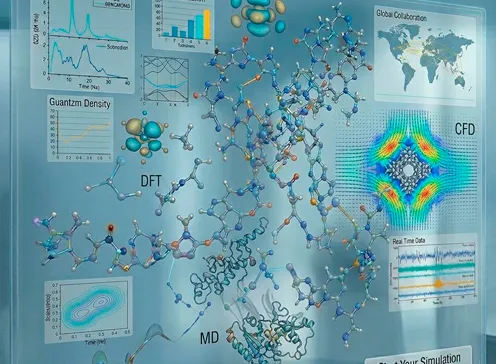
Yes, this is one of our core advantages. We routinely use high-precision First-Principles (DFT) and Molecular Dynamics (MD) calculations to generate robust training datasets. From there, we develop customized Machine Learning Force Fields (MLFF) to extend quantum-level accuracy to macroscopic time and length scales.

06
What hardware infrastructure supports your machine learning training and inference?

Keyan calculation relies on our proprietary, top-tier GPU supercomputing clusters. Whether training deep graph neural networks for molecular generation or fine-tuning multi-modal models, our robust computing power effortlessly handles massive parameter spaces and accelerates convergence without long queuing times.

07
Which types of organizations do you primarily serve with your AI solutions?

We provide tailored intelligent computational services specifically designed for universities, research institutes, and scientific research enterprises. Our solutions are engineered to empower these distinct groups to overcome traditional R&D bottlenecks and accelerate technological commercialization.

08
What specific deliverables will I receive upon the completion of a machine learning project?

You will receive a comprehensive, transparent package. This includes the processed datasets, the fully trained and optimized model weights, well-documented source code, a detailed methodology report, and high-resolution visualization charts perfectly formatted for submission to top-tier SCI journals.

Other Simulation Computing Service

MD Simulation Utilizing empirical force fields, it simulates the dynamic evolution of large atomic systems under specific conditions. It accurately analyzes polymer rheology, macromolecular folding, and interfacial thermodynamic behavior, intuitively displaying structural changes and kinetic characteristics at the nano-micro scales.
VIEW MORE
Finite Element Analysis By discretizing continuous physical fields, it efficiently simulates multi-physics coupling phenomena involving mechanics, heat transfer, and fluids. It helps researchers accurately evaluate structural stress distribution and fatigue life, optimizing device design and drastically reducing physical testing costs.
VIEW MORE
Quantum Chemistry Delving into the molecular level, it accurately calculates reaction barriers, locates transition states, and predicts spectroscopic features. It reveals the microscopic mechanisms of complex chemical reactions, providing core theoretical guidance for efficient catalyst development and novel drug design.
VIEW MORE
Need simulation computing, research HPC, or SCI publication support?

Tell us what you're working on—our PhD-level team will respond quickly with a tailored solution and quotation (DFT/MD/FEM/CFD, 200+ PFlops compute resources, or end-to-end manuscript support).
Contact Us

Latest News about KEYAN

jiaziqing@qiyancalc.com
+86-400-119-8339
Room 714-12, 7th Floor, Building 4, No. 1199 North Section, Hupan Road, Xinglong Sub-district, Tianfu New Area, Chengdu, Sichuan, China
We use cookies on this site, including third party cookies, to delivery experience for you.
Accept Cookies
Read Privacy Policy